St. Thomas the Apostle Catholic Church has shared the love of God and served our community for nearly two centuries. Over that time, we have established two schools, helped found the area’s first hospital, and sponsored other Catholic parishes as the city grew.
Catholic immigrants from Ireland and Germany settled in this area beginning in the 1820s. They built the original church of St. Thomas the Apostle, the first Catholic parish in Ann Arbor, and dedicated it in on August 6, 1845. The dedication happened on the very day that the first commencement exercises were taking place at the University of Michigan. Our original church building was the first brick church in the city.
The parish population grew rapidly in the first several decades because of an influx of Irish and German Catholics. The Catholic community in Ann Arbor continued to grow and diversify as the city and university expanded.
In 1868, St. Thomas purchased a former public school building and opened a Catholic school. The school grew so quickly that the parish built a new, larger school building in 1886. During this period, St. Thomas acquired land on North Main Street and founded a cemetery that still exists today.
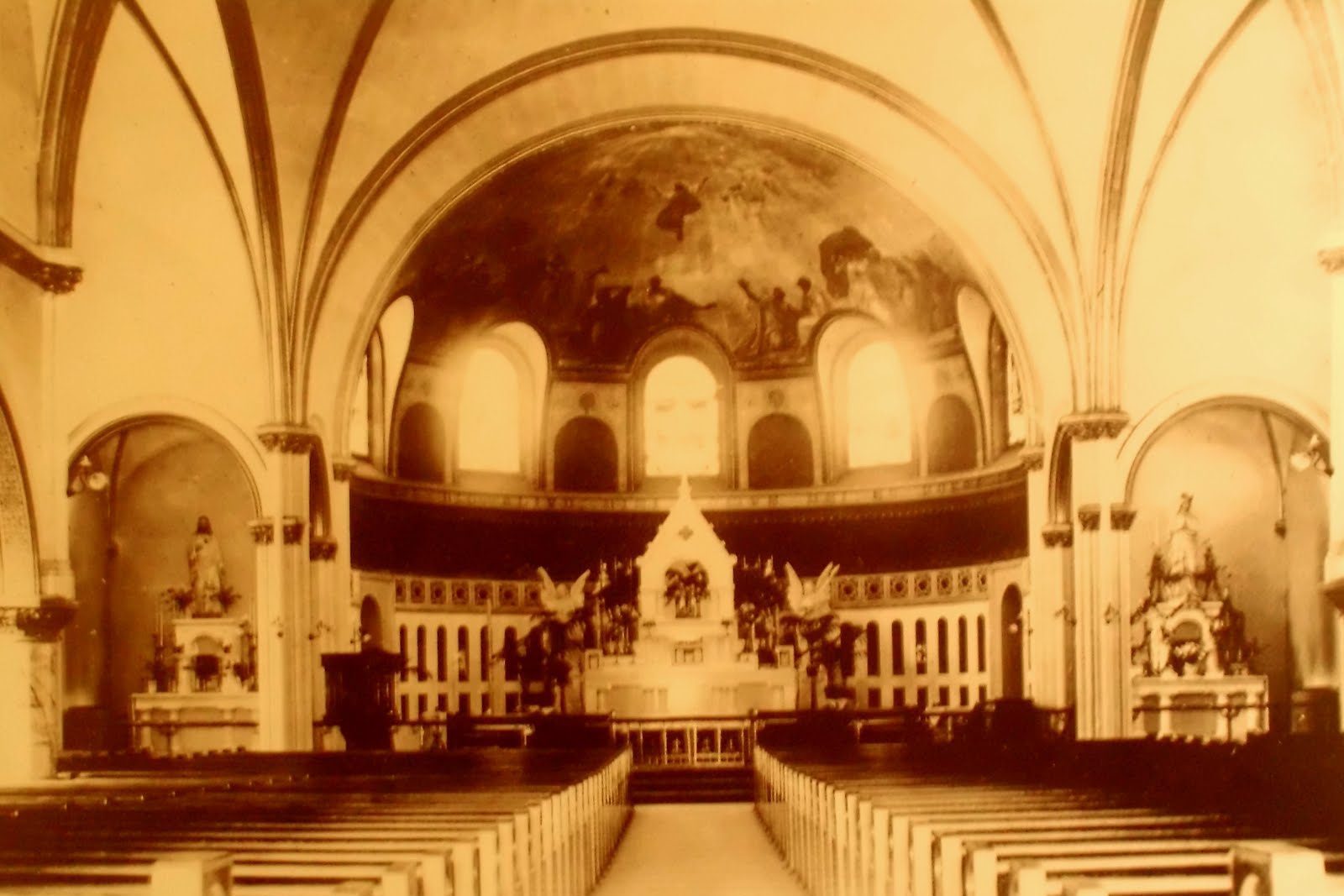
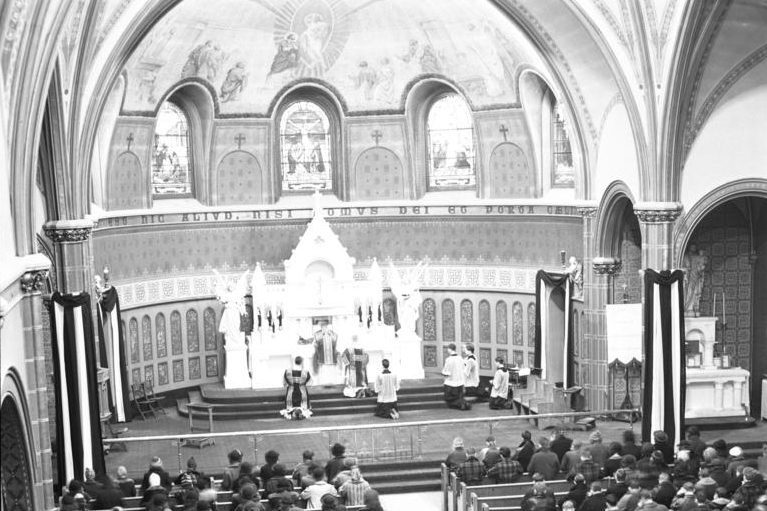
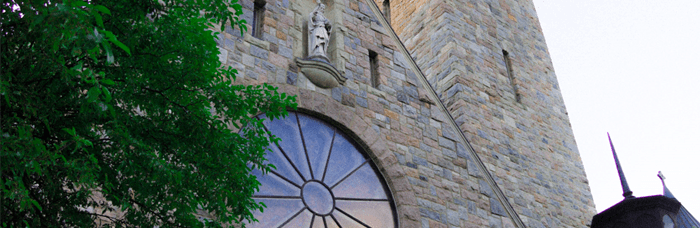
By 1891, the parish needed a larger church building. Our energetic pastor Fr. Edward Kelly led the effort. Construction began in 1897 at the new site located at the intersection of Kinsley and Elizabeth Streets. The dedication of the Italian-style Richardsonian Romanesque church took place in 1899, and all work on the new church building was completed by 1905.
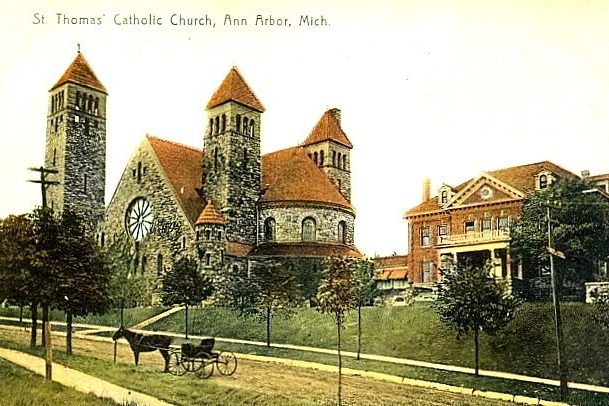
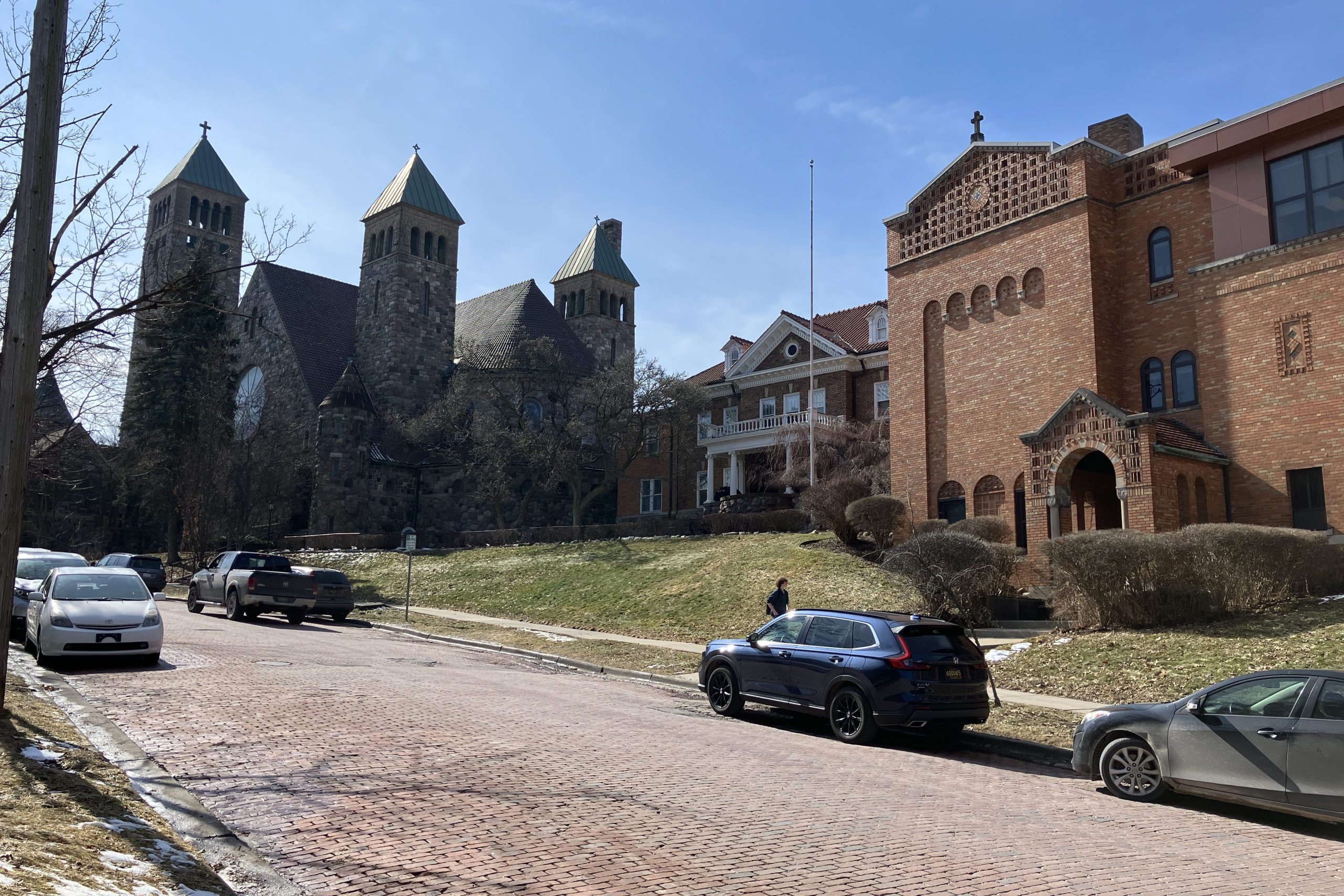
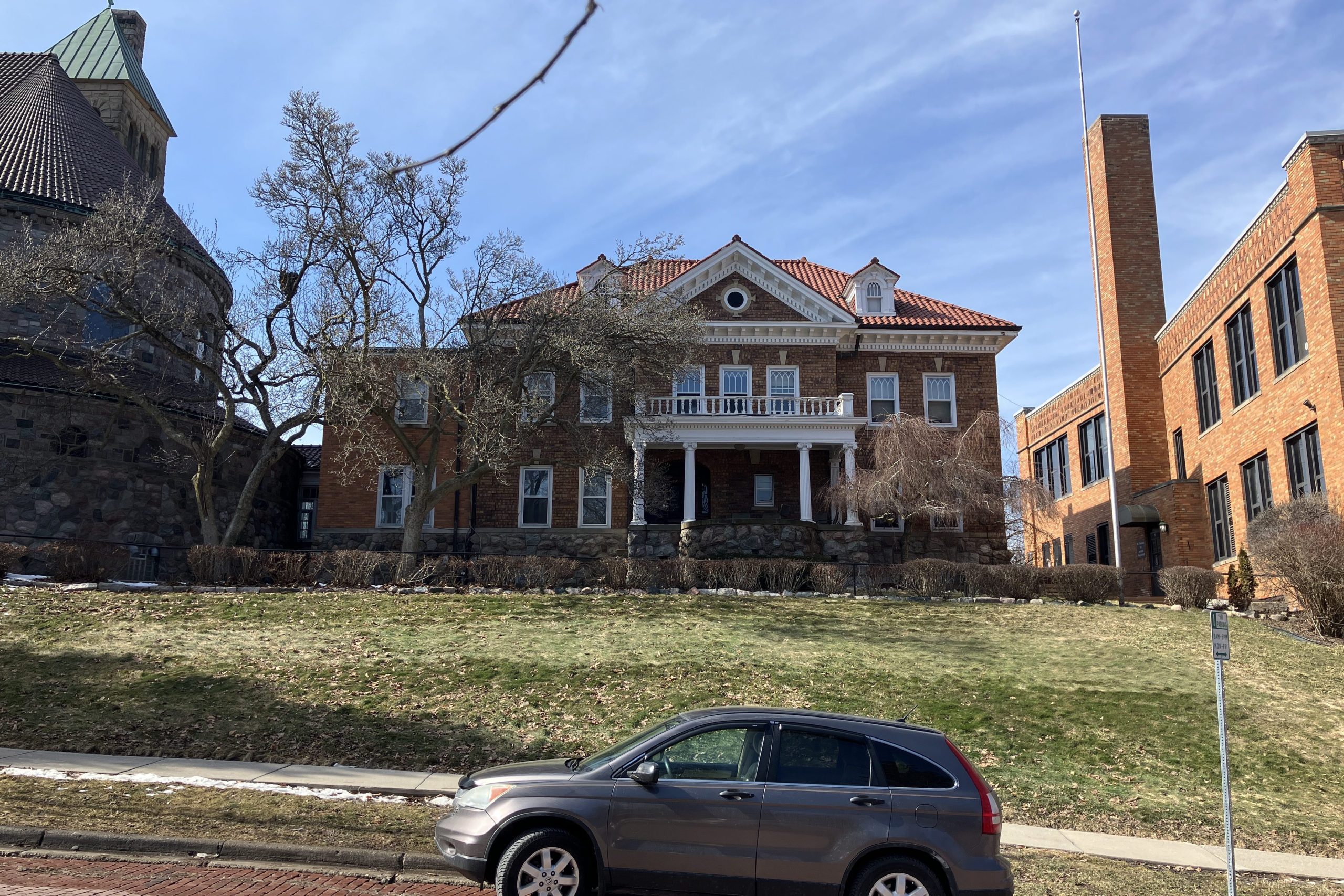
Fr. Kelly also oversaw the construction of a rectory (priests’ residence) behind the church in 1902. The orange brick house is a long rectangle with a projecting center capped by a highly decorated full pediment. The large center porch has a fieldstone base topped by slender Ionic columns supporting a graceful balustrade. Two small pedimented dormers add to the impression of a country estate. The rectory’s Georgian Colonial Revival style contrasts with the church, but both buildings feature clay roof tiles.
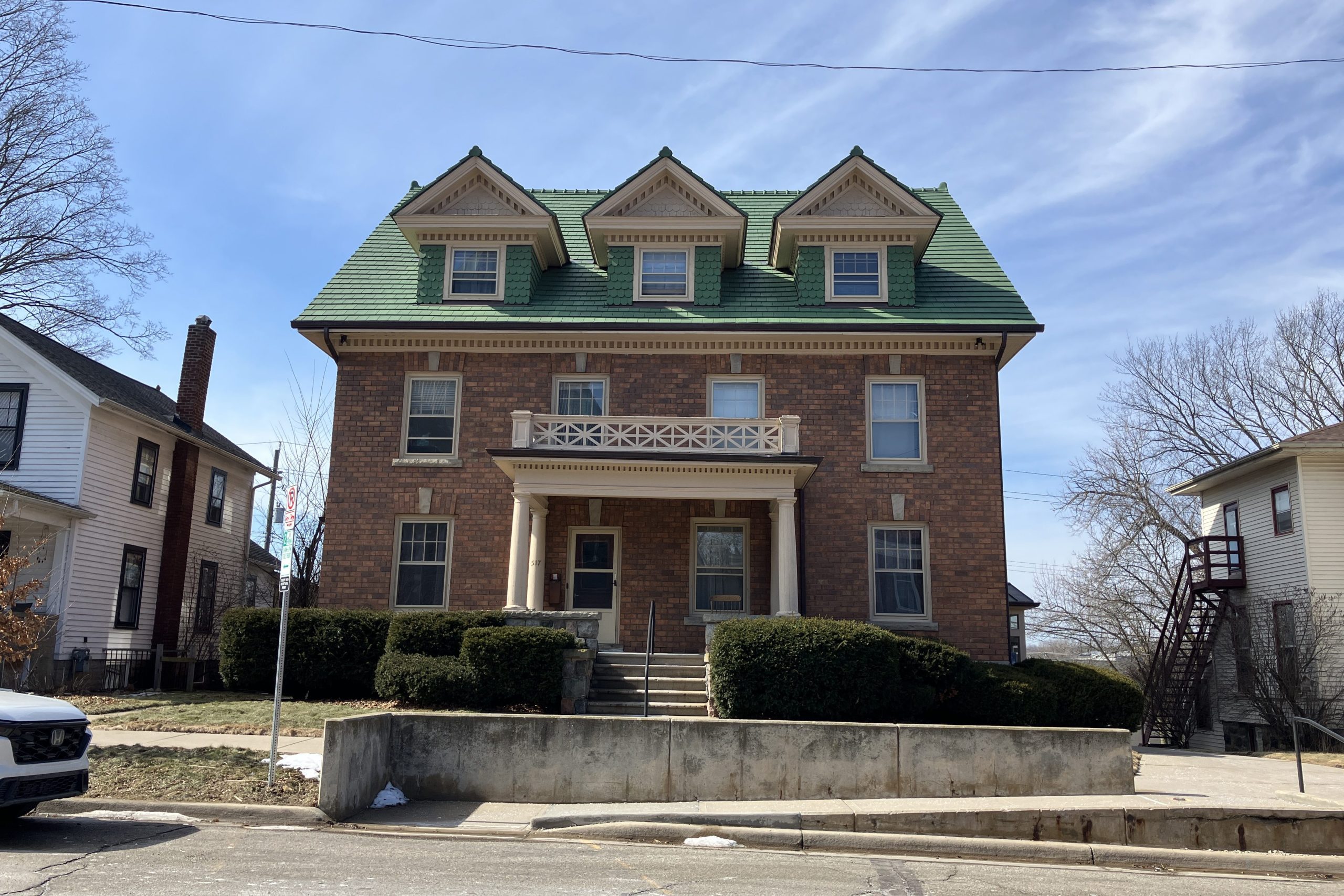
The last building constructed during Fr. Kelly’s tenure was the convent for the Sisters of the Immaculate Heart of Mary. It resembles the rectory in many respects, including its orange brick. More pronounced than on the rectory are the pedimented dormers embellished on the sides with fish-tail shingles and finished off with the same unusual green clay tile as the main roof. The sisters moved into the building in 1911.
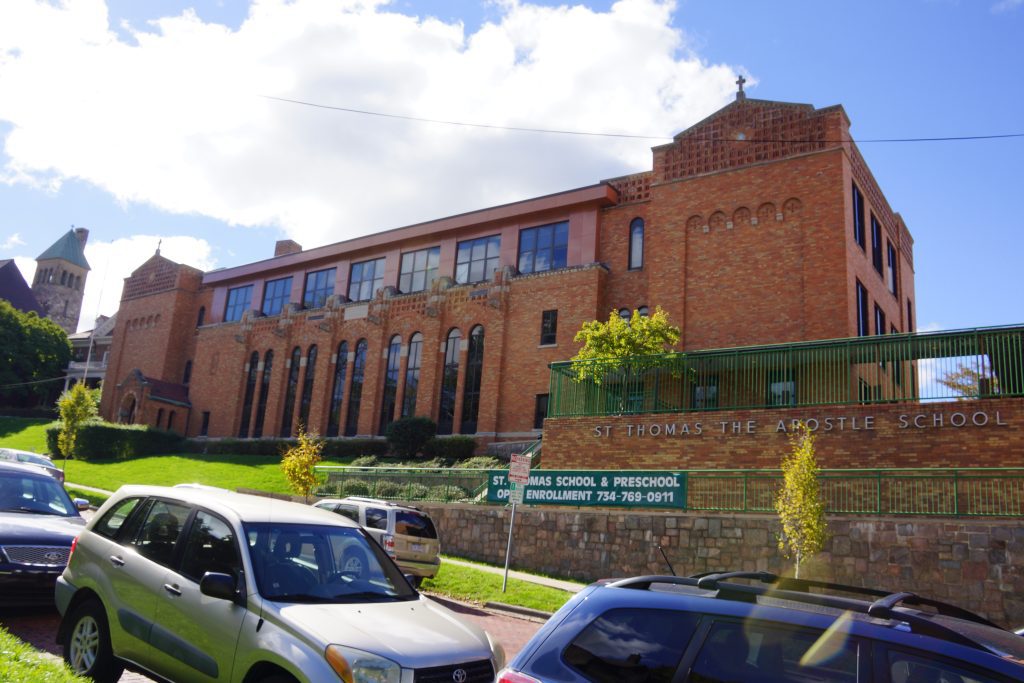
A new school building was completed and dedicated in 1930. An addition, which includes the gymnasium, cafeteria, and additional classrooms, was constructed in 1954. At that time, a library addition was also built on the roof of the old school building. In 1980, the high school separated from the elementary and middle school and took the name of Father Gabriel Richard High School after the prominent nineteenth-century priest and founder of the University of Michigan. FGR is now located off site. St. Thomas the Apostle Catholic School continues to thrive. It now offers a classical Catholic education from preschool through twelfth grade.
Today, the former convent is known as St. Catherine House and serves as a residence for young women discerning religious vocations.
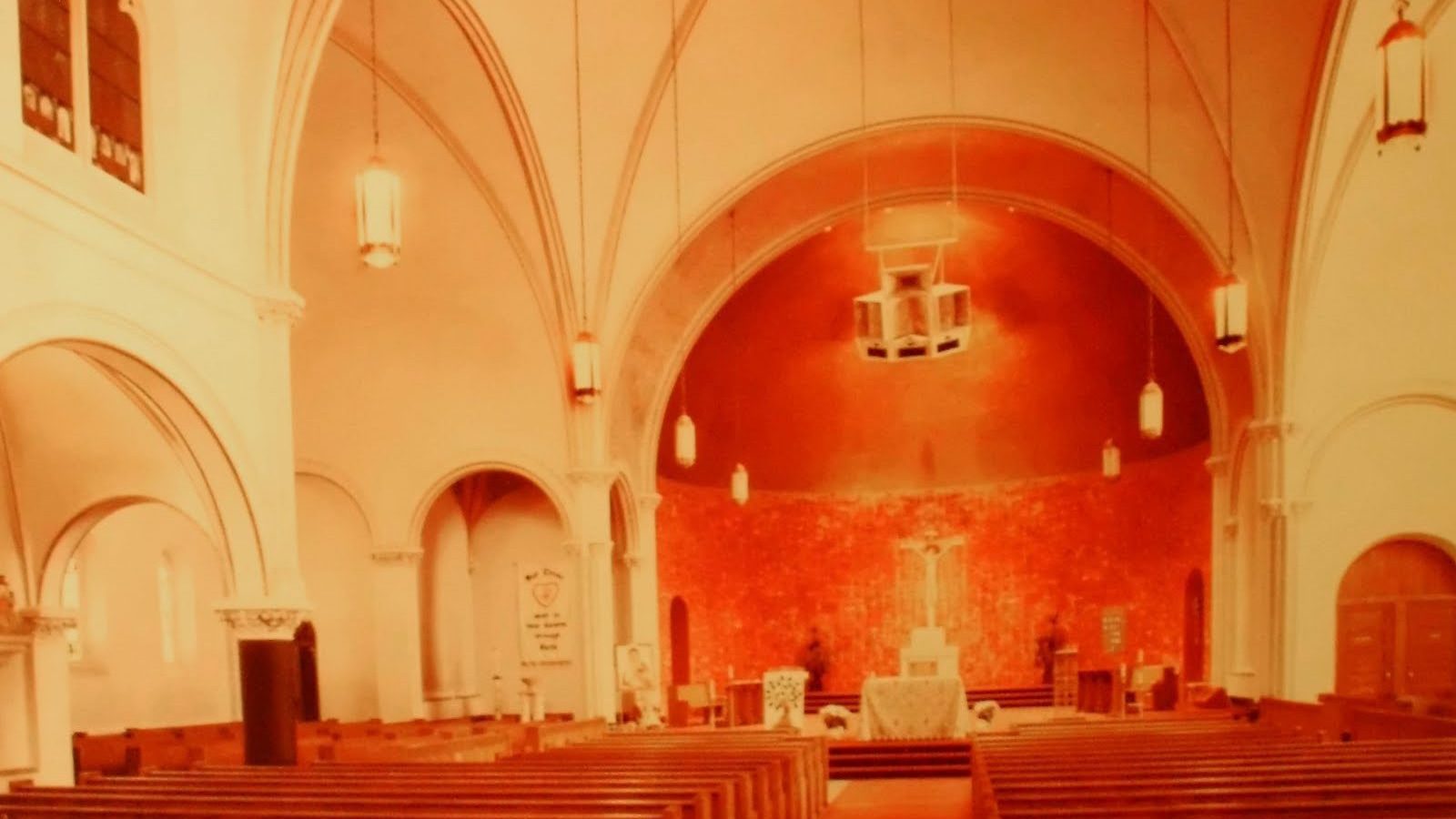
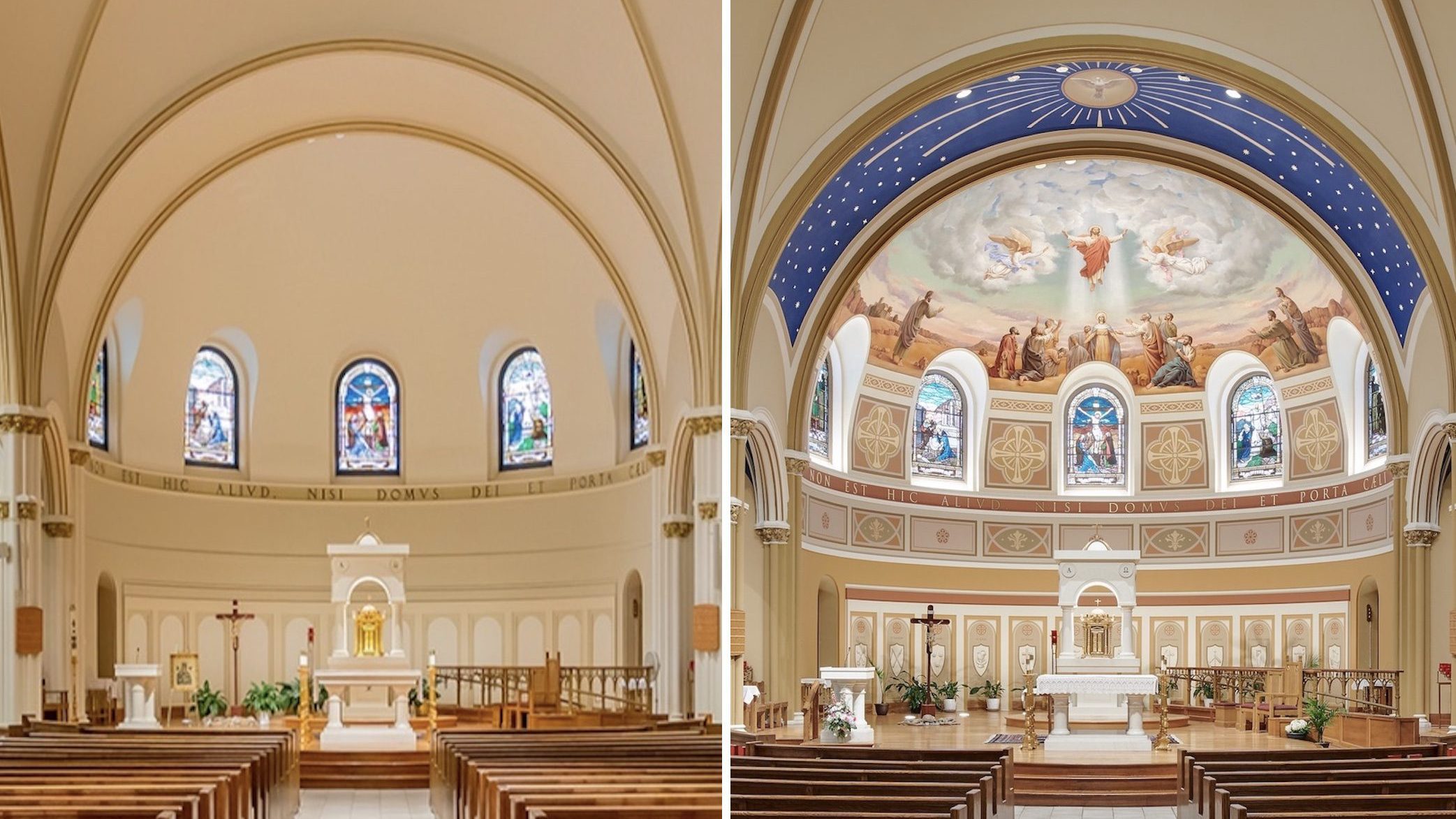
The interior of the church has undergone several renovations since 1899, including drastic simplifications in the 1960s and 70s and several restorations in the 1990s and 2000s. The most recent restoration took place in 2021.